
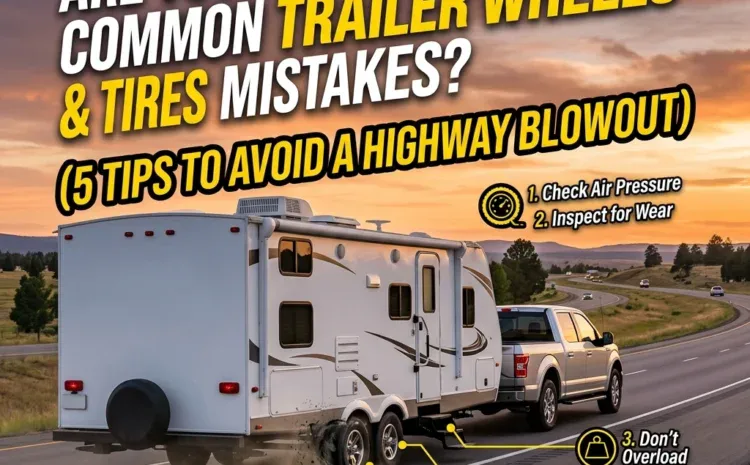
Are You Making These Common Trailer Wheels and Tires Mistakes? (5 Tips to Avoid a Highway Blowout)
There is a specific kind of stress that only comes from towing. Whether you are hauling a boat to the lake, moving livestock, or taking the camper out for a long-awaited weekend, that extra weight behind your truck changes everything. But here is the scary part: many drivers focus entirely on their truck’s engine or hitch while completely neglecting their trailer wheels and tires.
A highway blowout with a loaded trailer is not just an inconvenience; it is a safety crisis. At The Tire Shoppe in Masontown, WV, we have spent over 40 years helping our community stay safe on the road. We have seen every trailer tire disaster imaginable, and most of them were preventable.
If you want to keep your cargo safe and avoid being stranded on the shoulder of the road, you need to know the most common mistakes people make with their trailer tires and rims. Let us dive into the five big ones and how you can avoid them.
1. Running on “Guesswork” Tire Pressure
The number one cause of trailer tire failure is improper inflation. Specifically, under-inflation is a silent killer. When a tire does not have enough air, the sidewalls flex more than they were designed to. This constant flexing creates massive amounts of internal heat.
Trailer tires are built differently than car tires. They often have stiffer sidewalls to handle heavy vertical loads. When those sidewalls get too hot, the rubber starts to degrade and the structure fails. By the time you feel a vibration in your truck, the tire is likely seconds away from disintegrating.
On the flip side, over-inflation is also a problem. It makes the tire stiff and bouncy, leading to a harsh ride that can damage your trailer’s suspension or even cause the trailer to hop over bumps, losing contact with the road.
How to avoid it:
Always check your pressure when the tires are cold. Do not rely on how the tire “looks.” A trailer tire can be significantly under-inflated and still look round because of its heavy-duty construction. Use a high-quality gauge and follow the manufacturer’s recommendations. If you are unsure about the right specs, our team at The Tire Shoppe can help you find the exact pressure needed for your specific load.

2. Mixing and Matching Trailer Tires and Rims
It is tempting to grab whatever spare tire is lying around the garage when you realize your trailer’s rubber is looking a bit thin. However, mixing different brands, sizes, or even tread patterns on a trailer is a recipe for disaster.
Trailer tires and rims need to work in perfect harmony. If you have a radial tire on one side and a bias-ply tire on the other, they will react differently to heat and road force. This causes the trailer to pull or sway, putting extra stress on your wheel bearings and the axle.
Furthermore, you must ensure your rims are rated for the pressure and load of your tires. Mounting a high-pressure tire on a rim designed for lower PSI can lead to a catastrophic wheel failure where the rim literally splits or the beads unseat.
How to avoid it:
Ensure all tires on the same axle are identical in brand, model, and wear level. When upgrading your trailer tires and rims, do it in sets. If you need a replacement, stop by for our tire repair and replacement services to ensure you are getting a perfect match that is safely rated for your trailer’s weight.
3. Ignoring the “Expiration Date” of Rubber
Most people judge a tire by its tread. On a car, that makes sense because you drive it every day. But trailers often sit for months at a time in the sun, snow, and rain. A trailer tire will almost always “die” from age and dry rot long before the tread wears down.
As tires sit, the anti-oxidant chemicals in the rubber do not get “worked” through the tire, causing the rubber to become brittle. UV rays from the sun accelerate this process, leading to “checking” or small cracks in the sidewall. Once those cracks appear, the tire’s structural integrity is gone.
How to avoid it:
Check the DOT date code on your sidewall. Most experts, including our team in Masontown, recommend replacing trailer tires every 3 to 5 years, regardless of how much tread is left. For a deeper look into why this matters, check out our guide on the impact of tire age on performance and safety.

4. Overloading and Poor Weight Distribution
Every trailer has a Gross Vehicle Weight Rating (GVWR), and every tire has a load index. Exceeding these limits is one of the fastest ways to cause a blowout. When you overload a trailer, you are asking the trailer wheels and tires to perform beyond their physical capabilities.
It is not just about total weight, either. If you load all your heavy gear at the very back of the trailer, you create a “pendulum effect” that causes dangerous swaying. If you load it all at the front, you put too much “tongue weight” on your hitch and front trailer tires, leading to uneven wear and potential failure.
How to avoid it:
Know your weights. Visit a local scale if you have to. Generally, you want about 60% of the cargo weight in the front half of the trailer to maintain stability. Also, make sure your trailer is level when hitched. If the trailer is tilted forward or backward, one axle is carrying more weight than the other, which will wear out those tires prematurely. Regular general repair and maintenance can ensure your trailer’s suspension is actually capable of handling the loads you are carrying.
5. Skipping the Pre-Trip Alignment Check
Think alignment is just for your truck? Think again. If your trailer axles are out of alignment, your tires are essentially “scrubbing” sideways down the road. This creates massive friction and heat, leading to rapid tread wear and, eventually, a blowout.
Trailer alignment can be knocked out by hitting a deep pothole, curbing the trailer during a tight turn, or even through normal wear and tear on the leaf springs and bushings. If you notice one tire wearing faster on the inside or outside edge, you have an alignment problem that needs immediate attention.
How to avoid it:
Perform a visual inspection before every long trip. Look for unusual wear patterns like feathering or cupping. If something looks off, get a professional tire alignment check. It is a small investment that can save you the cost of two new tires and the headache of a roadside breakdown.

Why Professional Expertise Matters
At The Tire Shoppe, we have been serving Masontown, WV, and the surrounding areas for over four decades. We are not just a shop; we are your neighbors. We know the local roads, the hauling conditions, and the specific needs of trailer owners in our community.
Towing is inherently risky, but with the right preparation, it does not have to be stressful. When you bring your trailer to us, we do more than just sell you rubber. We inspect the trailer tires and rims, check for signs of bearing failure, and ensure your setup is safe for the long haul. Our tire services in Masontown, WV are designed to give you peace of mind.
Final Thoughts for a Safe Journey
Avoiding a highway blowout comes down to vigilance. Trailer tires are the unsung heroes of your hauling setup, and they deserve as much attention as your truck’s engine. By keeping an eye on pressure, ensuring your tires and rims match, watching the age of the rubber, loading properly, and keeping things aligned, you are doing your part to keep the roads safe for everyone.
Do not wait for a “boom” to realize your trailer needs attention. If you are in Preston County or the surrounding area, come see us. Whether you need a fresh set of trailer wheels and tires or just a quick safety inspection, we are here to help.
Ready for a safer tow? Contact us today or stop by The Tire Shoppe in Masontown. Let’s make sure your trailer is as ready for the road as you are!